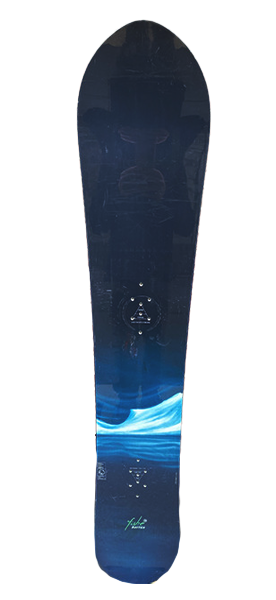
The history of the snowboard originates from the curiosity and passion an ordinary man had. In a world filled of endless mountains packed with snow, the idea of changing the way we ride down the snow was never thought of. All anyone did was ski, but when Sherman Poppen got inspired, it soon changed the world of riding down a mountain and shit hit the fan.
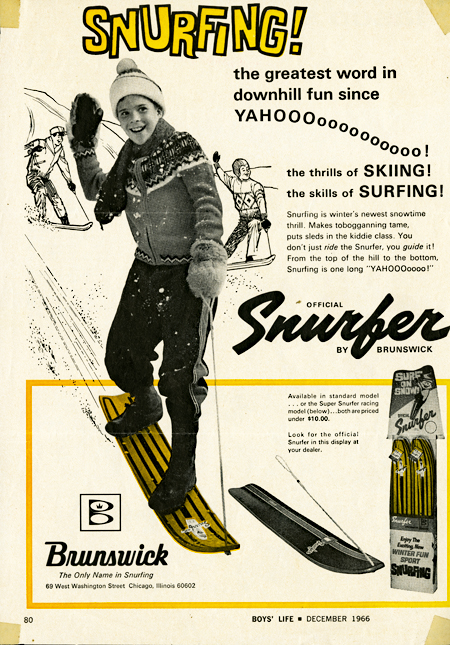
The Snurfer
1965
Many credit Sherman Poppen, the creator of the Snurfer, as the inventor of the snowboard. On Christmas Day 1965, he braced two children’s skis together for his kids’ amusement, and then had the business acumen to immediately realize he was onto something. Within a few weeks he had a prototype, essentially a waterski with non-skid material to stand on and a rope lanyard to hold onto for better balance. Poppen and his business friend, Brunswick, saw the potential of the Snurfer. By 1970, approximately one million Snurfers had been sold in the US, Canada, and Europe. A newly designed brochure featured a competitive snurfer; the lead sentence read, “Tournaments are held with it.” This opened the door for the world of snowboarding to be born.
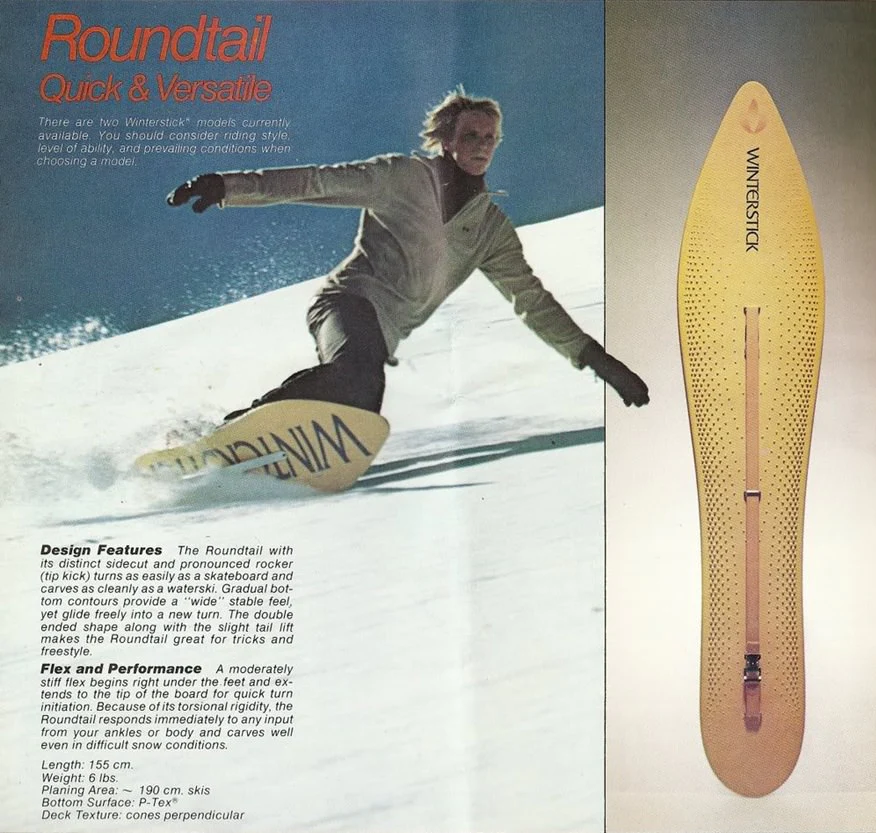
Winterstick
1970
In 1972, Dimirtrije Milovich and Wayne Stoveken engineered a board made to surf the snow. They developed a model based on the newest evolution of surfboards, the short-board. His design included steel edges, laminated fiberglass, gravel on the board for traction and nylon straps. They relocated to Utah, to test their prototype on the fabled powder. In Powder Mountain, they rode, refined, and iterated on their concept and perfected the art of surfing on the snow. Winterstick was born, a founding father of the snowboarding revolution. Today they still make boards by and for real riders. They know that the perfect turn is a sacred thing, days on the mountain set you free, and the best boards are a mix of art and engineering.
The Burton Backhill
1979
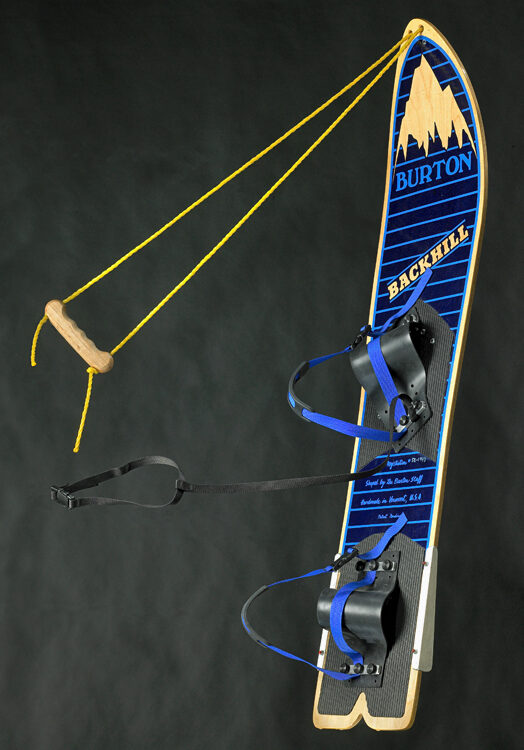
The year was 1977, and Jake Burton Carpenter had just quit his corporate job in New York City and headed north to Londonberry, Vermont. There he set up shop in a small barn with one purpose in mind: build the first Burton snowboard. From unconventional materials to unorthodox construction techniques, Jake is credited with doing the bulk of the heavy lifting. Jake traveled to Santa Cruz, California, and befriended the renowned surfboard shaper, John Mel. The two grew close and John would leave his factory open in the evening so that Jake could experiment with surfboard constructions. After building more than 100 prototypes with various construction methods, Jake settled on laminated maple and named his first snowboard, the Burton Backhill. The board featured a narrow design with a single strap binding and rope and handle attached to the nose. Available as a regular or goofy setup, the Burton Backhill featured tool-free binding adjustments and top and bottom graphics. The first Burton ads appeared in Surfer and Skateboarder magazines a short time later, showcasing the Burton Backhill to the world and kicking off the snowboard revolution.
Splitboard
1994
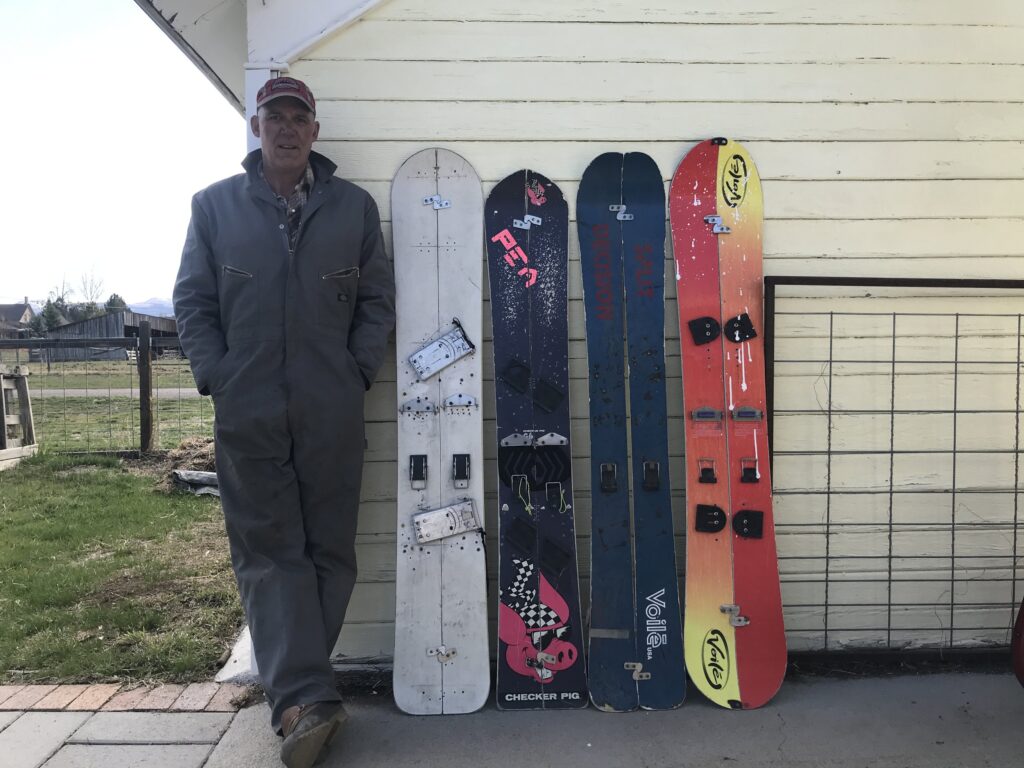
Since the dawn of skiing, human beings have been looking for newer and better ways to get far into the untouched backcountry. Machines like snowmobiles and helicopters have been the dominant means for years, but the high price tag and risks involved have kept backcountry access to a minimum. In 1991, Brett Kobernik brought an idea to Mark Wariakois, founder of Voilé, to combine the snowshoe and the snowboard into a single revolutionary tool for accessing and shredding the thousands of acres of snow not found within the boundaries of any ski resorts. That tool is known today as the splitboard. In 1994 that they began selling their splitboards wholesale to dealers. This led to growth within the company that allowed them to double the size of their production, as well as design and manufacture their own bindings specifically for their boards. They also made an attachment for the binding mounts that allow the rider to mount any regular snowboard binding to the splitboard once they reach the top. For the journey upwards, the rider applies a pair of nylon mohair skins to the bottom of each side of the splitboard, then clips in to a pair of telemark style bindings. Once the rider has reached the destination, the two sides clamp together and the bindings are mounted, allowing the rider to shred sideways on the powder.
Burton Powder Board
2002
In 2002, Burton came out with The Fish: A hybrid board with a fuller nose and tapered tail that was fun to ride anywhere but EXCELLED in powder. Burton wanted to represent a more inclusive way of riding and understand the terrain. Of course, powder shaped boards were nothing new, one of the earliest “true” snowboards was the Winterstick, a powder-specific board. But once the 90’s arrived, riding switch became a thing, twin tips were all the rage and board outlines all started looking the same. Powder hounds could still get their hands on a classic swallowtail, but that was it. Once Burton came out with The Fish, it changed the game. It allowed switch riders to ride in the powder and changed the way powder boards were engineered. Today, powder boards provide a floaty, speedy and responsive feel to deep snow. Powder boards allow you to glide and carve powder without getting stuck or slowing down.